Forecasting software that keeps you aligned with reality, all year long
Farseer makes forecasting continuous.
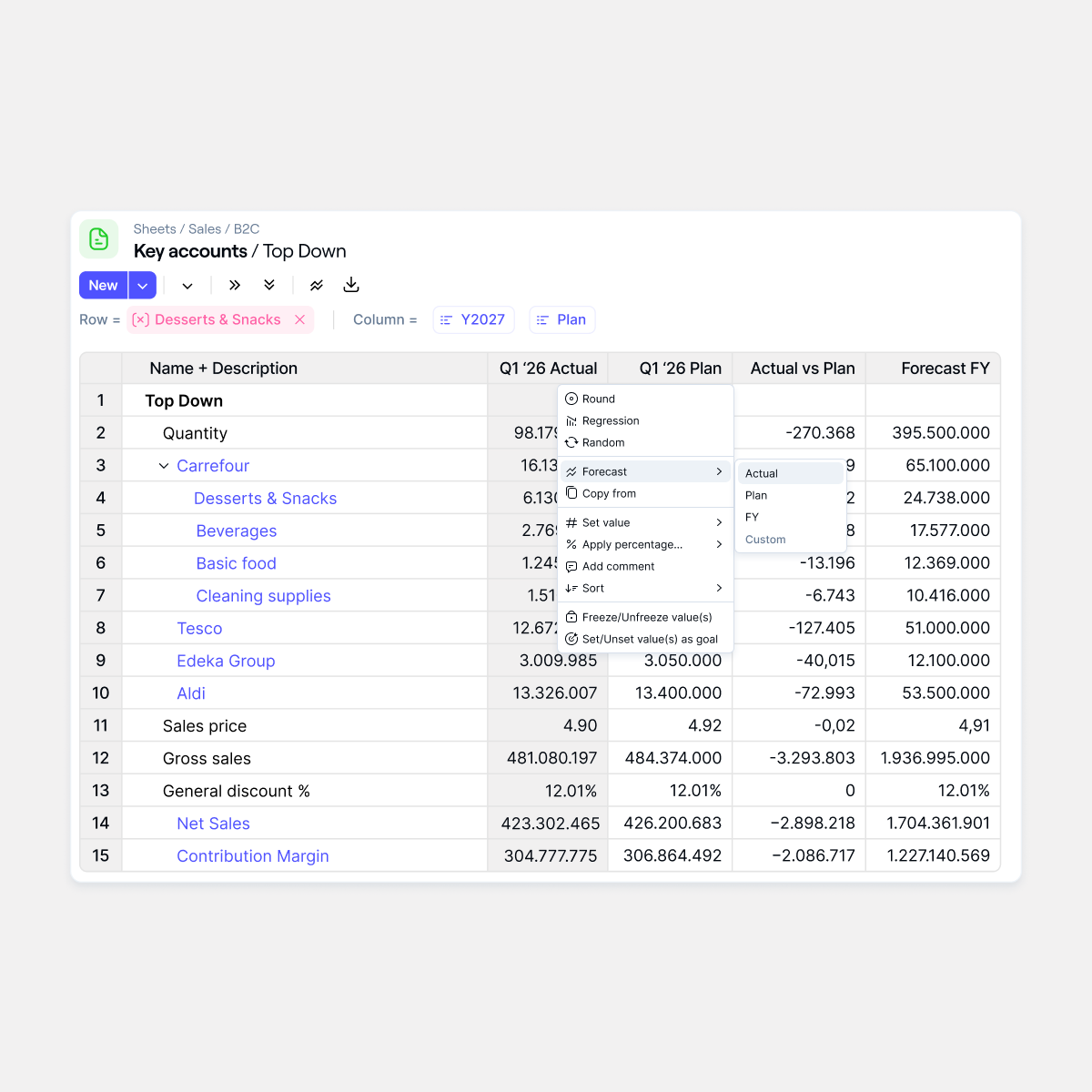
Update key drivers, move your forecast forward, and instantly see the impact across all financial statements, without rebuilding models or starting from scratch.
A rolling forecast is a financial planning model that continuously predicts business performance by adding a new time period as each one ends. Unlike static annual budgets, it maintains a forward-looking horizon, typically 12 to 18 months, so your projections always reflect current business conditions.
A static budget is set once a year and stays fixed, while a rolling forecast updates continuously as new data comes in. Rolling forecasts extend the planning horizon forward each period, giving finance teams an always-current view of projected performance rather than relying on outdated assumptions.
You should switch to a rolling forecast to continuously adapt to market changes with an always-current view of projected performance, rather than relying on quickly outdated annual budgets.
Farseer replaces static forecasting cycles with a forecast that rolls forward automatically. When a period closes, the horizon extends in real time. Driver-based recalculation and live actuals integration mean your projections stay accurate — no rebuilding spreadsheets or relinking data required.
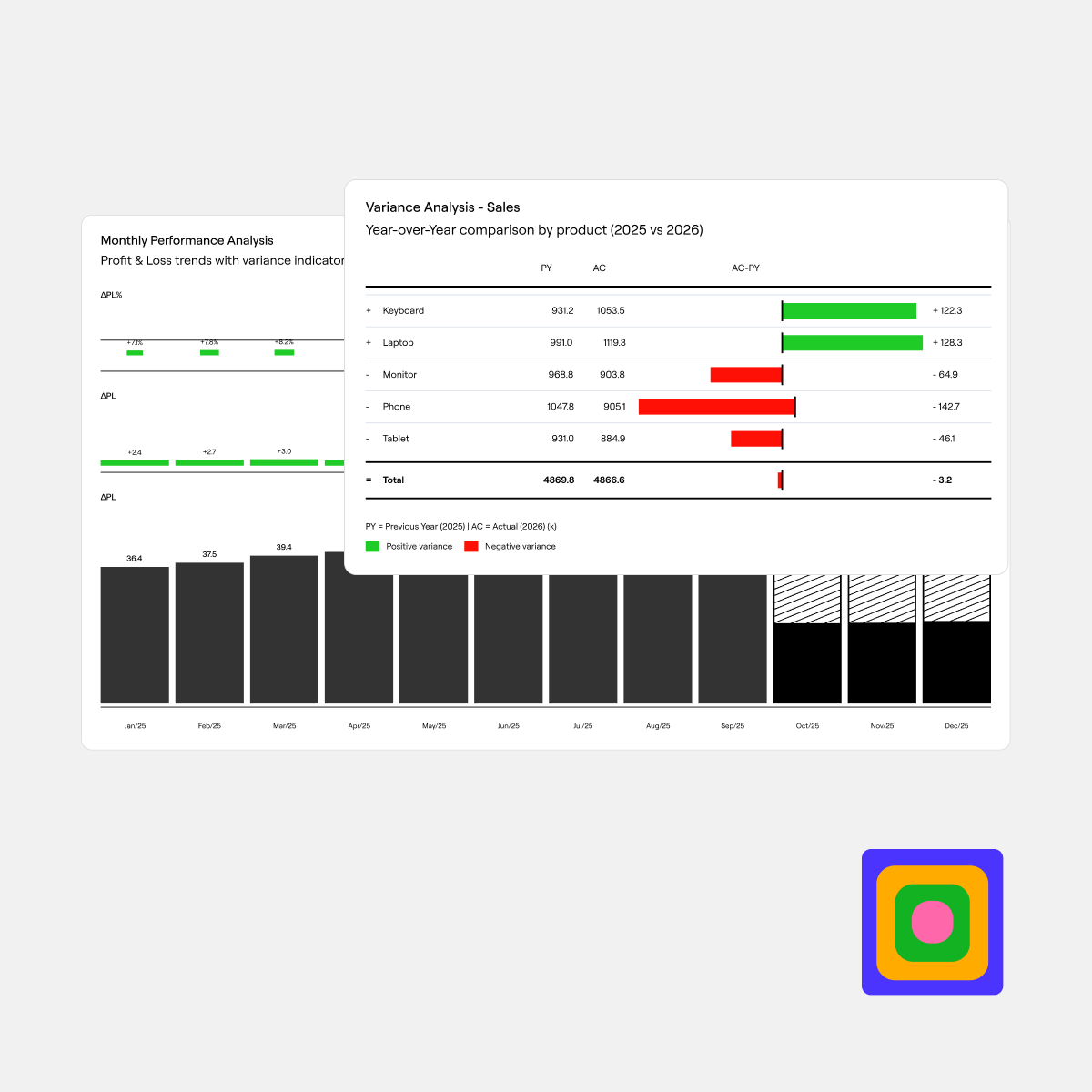
Farseer integrates actuals into your rolling forecast in real time, so you can spot variances the moment they appear. Targets update dynamically as projections change, giving finance teams continuous visibility into actual vs. forecast performance — without waiting for month-end reconciliation or manual data pulls.
Run a rolling forecast on your numbers
Find a time to meet with Farseer
✓
What Happens Next
Three steps from booking to your first live rolling forecast.
1. ASSESS
Map your workflows
We review your data, processes and business goals to design the right setup.
2. CONNECT
Secure your foundation
We integrate your systems and structure your data in an isolated, ISO 27001:2022-certified environment.
3. ACTIVATE
Steer your organization
Your team can budget, forecast and model scenarios in one connected platform.